Sedona Native American History: The Sacred Roots of the Red Rocks
Sedona native american history stretches back thousands of years, long before anyone called these formations vortexes, the red rocks were sacred.
The spiritual identity that draws millions of visitors to this valley every year did not begin with the New Age movement of the 1980s. It began thousands of years ago with the Indigenous peoples who lived here, prayed here, built their homes into these cliff faces, and understood this landscape as alive with power.
Understanding Sedona native american history is not just respectful, it is essential. You cannot fully appreciate what Sedona is today without knowing what it has always been. And you cannot visit the vortex sites with integrity without acknowledging the people whose ceremonies first sanctified this ground.
The Sinagua: Sedona’s Ancient Builders
Around 650 A.D., a people archaeologists call the Sinagua (Spanish for “without water,” a reference to the dry farming techniques they mastered) established communities throughout the Verde Valley and what is now Sedona. They were not the first inhabitants, evidence of human presence in the area dates back at least 10,000 years, but they were the first to leave a lasting architectural record.
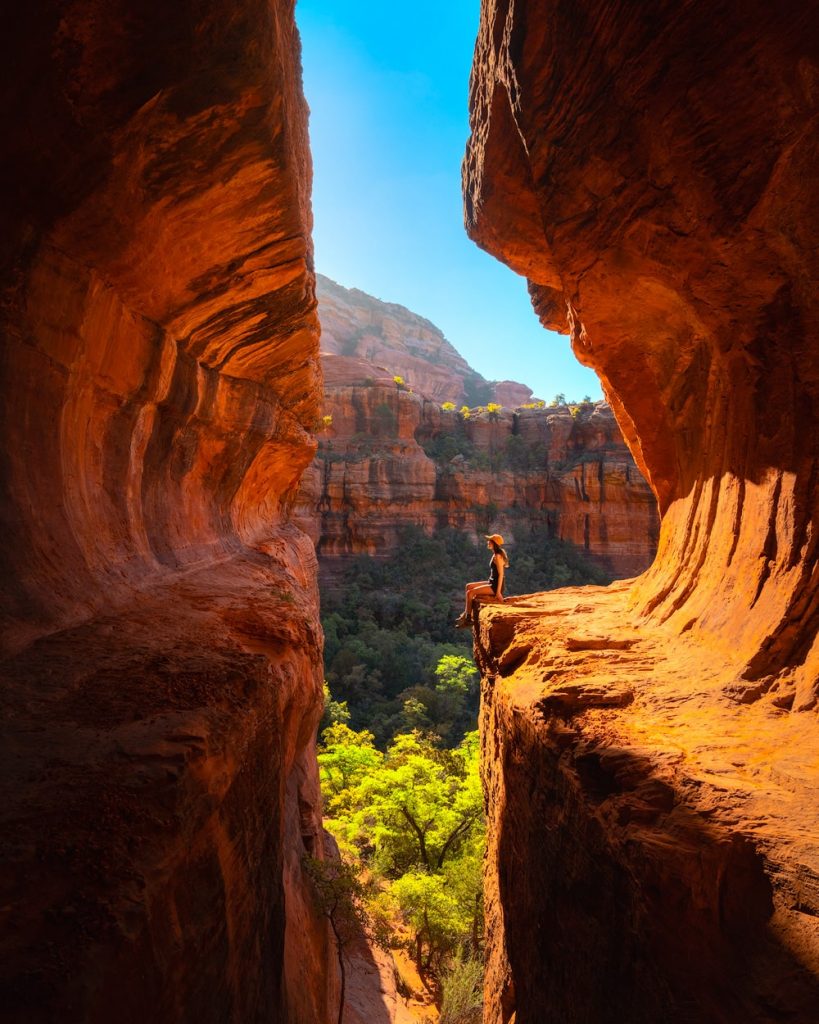
The Sinagua were sophisticated builders. Their cliff dwellings, some of which are preserved at Montezuma Castle and Tuzigoot National Monuments, demonstrate advanced knowledge of construction, astronomy, and water management. In the Sedona area specifically, the Sinagua built structures into the red rock alcoves and along Oak Creek, taking advantage of natural shelter and water access.
They were also artists. The rock art (petroglyphs and pictographs) scattered throughout the Sedona landscape tells stories of ceremony, agriculture, migration, and spiritual practice. Many of these sites are on private or protected land, and we strongly encourage visitors to view them only through guided tours led by authorized operators.
Around 1400 A.D., the Sinagua disappeared from the archaeological record. They did not vanish: researchers believe they migrated and merged with other communities. The Hopi people of northern Arizona identify the Sinagua as their ancestors, and many Hopi clans trace their migration stories through the Verde Valley.
The Yavapai and Apache
The Yavapai people arrived in the Verde Valley around 1300 A.D., and the Tonto Apache moved into the area around the same time. These two distinct nations developed a cooperative relationship, sharing territory and eventually intermarrying to such an extent that they are today recognized as one nation: the Yavapai-Apache Nation, headquartered in Camp Verde, about 25 miles from Sedona.
The Yavapai were primarily hunter-gatherers who moved seasonally through the landscape, following food sources and water. Their relationship with the land was intimate and specific, they knew every canyon, every water source, every plant community. Their oral traditions describe the red rocks not as scenery but as living beings, ancestors, and spiritual teachers.
Boynton Canyon holds particular significance in Yavapai-Apache tradition. It is identified as the place where the first people emerged into the world, a creation story as foundational to the Yavapai-Apache as Genesis is to Christians. When you hike Boynton Canyon, you are walking through someone’s origin story.
In 1876, the U.S. military forcibly removed the Yavapai and Apache people from their homeland and marched them 180 miles to the San Carlos Reservation in one of the many tragic episodes of American Indian removal. Hundreds died during the forced march. The survivors were not allowed to return to the Verde Valley until 1900, and the scars of that displacement persist today.
The Yavapai-Apache Nation is active in the Sedona area today, operating Cliff Castle Casino and the Montezuma Castle area, and working to preserve their language, culture, and connection to the land. Their presence is a reminder that the spiritual power visitors seek in Sedona has been recognized and honored by Indigenous peoples for centuries.
The Hopi Connection
The Hopi Nation, based on their mesas in northeastern Arizona, maintains deep ancestral ties to the Sedona area through their connection to the Sinagua. Hopi migration stories describe journeys through the red rock country, and specific formations in the Sedona landscape appear in Hopi oral tradition.
The Hopi understanding of the land as sacred and spiritually charged predates the modern vortex concept by millennia. Their ceremonial practices, which are private and not open to outside observers, reflect a relationship with the earth’s energy that echoes what today’s spiritual visitors describe in more New Age terms.
How the New Age Movement Arrived
Sedona’s modern spiritual identity began to crystallize in the late 1970s and early 1980s. Page Bryant, a psychic and author, is widely credited with identifying and naming the four vortex sites in the early 1980s. Her work attracted a wave of spiritual seekers, healers, and alternative practitioners who established the metaphysical community that thrives today.
The 1987 Harmonic Convergence, a globally coordinated meditation event, drew thousands of participants to Sedona and cemented the town’s reputation as a spiritual destination. Since then, the metaphysical economy has grown into one of Sedona’s primary industries.
It is worth noting that this layering of spiritual traditions is not always comfortable. Some Indigenous community members have expressed concern about the commercialization of practices and concepts that originated in Native traditions. The New Age adoption of terms like “shaman,” “medicine wheel,” and “sacred ceremony” raises legitimate questions about cultural appropriation that thoughtful visitors should consider.
How to Visit Respectfully
At vortex sites: Remember that these locations were sacred to Indigenous peoples long before they became tourism destinations. Leave no trace: no cairns, no crystals, no prayer flags. The practice of stacking rocks (cairn-building) at vortex sites is not an Indigenous tradition and contributes to erosion.
At archaeological sites: Never touch, move, or remove artifacts. Do not enter cliff dwellings unless on a guided tour. Report any damage or vandalism you witness to the U.S. Forest Service.
Support Indigenous businesses: The Yavapai-Apache Nation operates several businesses in the Verde Valley. Spending money there directly supports the community. The nation also offers cultural programs and events that provide authentic context for understanding the region’s Indigenous heritage.
Language matters: Be mindful of the difference between appreciating a culture and appropriating it. Participating in a ceremony led by an authorized practitioner is different from buying a mass-produced “Native American medicine wheel kit” at a tourist shop.
Why Sedona Native American History Matters for Your Visit
When you stand at a vortex site and feel something, a tingling, a peace, a pull, you are standing where people have felt something for thousands of years. The Sinagua chose these specific locations for their dwellings and ceremonies. The Yavapai-Apache identified these canyons as sacred in their creation stories. The Hopi trace their ancestral journeys through this exact landscape.
Whatever you call it, vortex energy, sacred ground, geological magnetism, or just overwhelming beauty, it has been here far longer than any of us. Approaching it with that awareness changes the experience.

The National Park Service Montezuma Castle page has visiting hours and historical information about the Sinagua cliff dwellings.
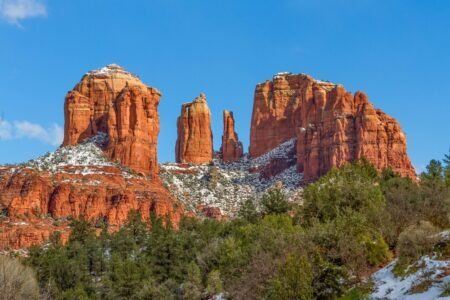
Related: For more context, see our Sedona Vortex Guide, our Boynton Canyon Vortex Guide, and our Cathedral Rock Vortex Guide.
Keep exploring: Sedona vortex guide · things to do in Sedona · Sedona, Arizona guide