
Sedona Weather
Month by month averages from the National Weather Service, today’s forecast, and what to pack in every season.
Sedona sits at about 4,400 feet in the high desert of central Arizona, which gives it four real seasons without the extremes of Phoenix below or Flagstaff above. Summer afternoons reach the mid 90s, winter days top out near 60 with freezing nights, and spring and fall are the mild, dry months that made the red rocks famous. The sun is out most days of the year, and the whole year brings only about 17 inches of rain, much of it in short summer monsoon storms.
Below you will find current conditions, the month by month averages from the National Weather Service, what each season feels like on the trail, and what to pack.
Sedona Weather Today
Current conditions and the short range forecast for Sedona, updated live.
Sedona Temperature by Month
These are the National Weather Service's 30-year climate normals (1991 to 2020) for the Sedona weather station, average daily high and low in degrees Fahrenheit and average rainfall in inches. The year averages a 77 degree high, a 49 degree low and about 17 inches of rain.
| Month | Avg high | Avg low | Rain | What it feels like |
|---|---|---|---|---|
| January | 58 | 34 | 2.0 | Crisp hiking days, freezing nights, occasional snow that melts by afternoon |
| February | 61 | 36 | 2.2 | The wettest month on paper, still mostly sunny; film festival season |
| March | 68 | 40 | 1.9 | Spring break crowds arrive with the warm afternoons |
| April | 75 | 44 | 0.8 | Near-perfect: dry, mild, wildflowers in the washes |
| May | 84 | 53 | 0.7 | Driest month of the year; hike early, swim at Slide Rock by afternoon |
| June | 94 | 61 | 0.2 | Hot and bone dry before the monsoon; be off the trails by late morning |
| July | 97 | 68 | 1.6 | Hottest month; afternoon monsoon storms and flash-flood risk in the washes |
| August | 94 | 67 | 2.0 | Monsoon peak: dramatic skies, cooler evenings after the storms |
| September | 89 | 61 | 1.7 | Still warm, storms taper off; the creek runs high after rain |
| October | 79 | 51 | 1.4 | The favorite month: warm days, cool nights, fall color starting in the canyon |
| November | 67 | 41 | 1.1 | Peak foliage in Oak Creek Canyon early in the month, then quiet |
| December | 58 | 33 | 1.5 | Coldest nights of the year, luminarias at Tlaquepaque, red rocks dusted white some mornings |
Sedona sits at roughly 4,400 feet, which keeps it about 10 degrees cooler than Phoenix in summer and brings freezing nights from November through March. The monsoon runs officially from June 15 to September 30, with the real moisture arriving in early July; the National Weather Service calls flash flooding its biggest hazard, so stay out of creeks and washes when storms build. Snow falls a few times most winters and rarely lasts past lunch in town.
For crowds, prices and events month by month, see our best time to visit Sedona guide, and for the bigger picture, the complete guide to Sedona, Arizona.
Sedona Weather by Season
The numbers above are averages; this is what they feel like when you are standing on the trail.
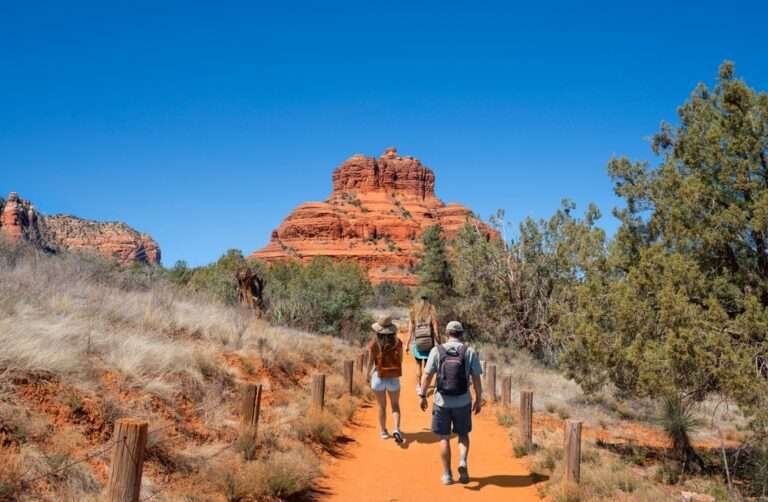
Spring (March to May)
Highs climb from 68 in March to 84 in May and nights warm from the low 40s into the 50s. April and May are among the driest months of the year, the washes bloom, and Oak Creek runs cold and full with snowmelt from the canyon. Spring break brings the first big crowds in March, and afternoons can be windy.
Pack: Layers for a 30 degree swing between morning and afternoon, sunscreen, a hat and a windbreaker.
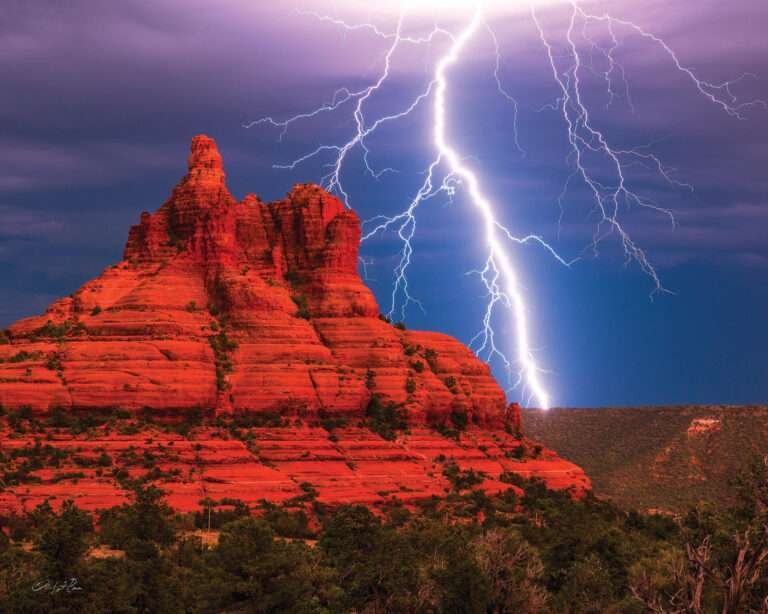
Summer (June to August)
June is hot and bone dry with highs in the mid 90s. The monsoon arrives in early July, and July and August bring afternoon thunderstorms, dramatic skies, flash flood risk in the washes and cooler evenings after the rain. Sedona runs about 10 degrees cooler than Phoenix, which is why the valley comes up here to escape. Start hikes at sunrise and be off exposed trails by late morning.
Pack: A wide brim hat, more water than you think you need, light long sleeves and a rain shell for the afternoon storms.
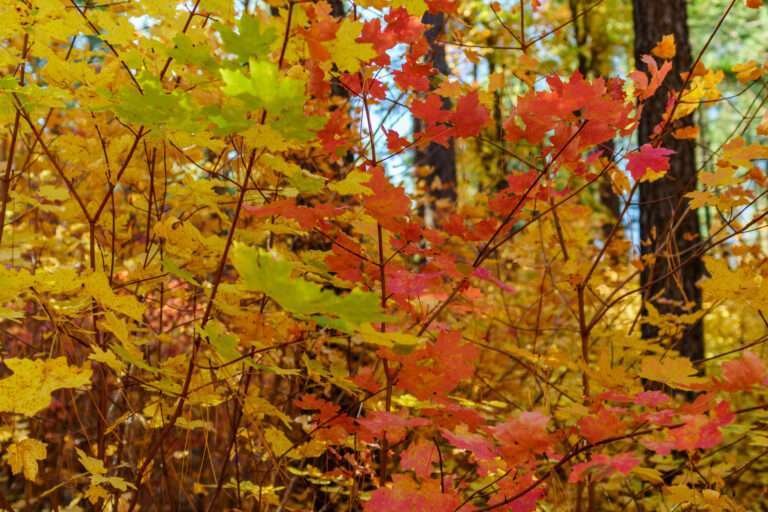
Fall (September to November)
September still hits the high 80s while the storms taper off. October is the month locals wait for: highs near 80, nights around 50 and almost no rain. Oak Creek Canyon turns gold and red from late October into early November, and the trails and hotels are at their busiest, so book early.
Pack: A fleece or light jacket for the evenings, hiking layers and sunglasses for the low autumn light.

Winter (December to February)
Days reach the high 50s to low 60s and nights drop into the low to mid 30s, so expect frost most mornings. Snow falls a few times most winters, usually a light dusting that melts off the red rocks by afternoon in town and lingers in the canyon and on shaded trails. January and February are the wettest months, but even then most days are sunny. Flagstaff Snowbowl is about an hour north for skiing.
Pack: A warm jacket, gloves and a beanie for the mornings, and shoes with grip for icy, shaded stretches of trail.
Snow on the Red Rocks
Drone footage of a heavy snowfall in Sedona. Storms this big are the exception; most winters bring light dustings that are gone from town by the afternoon.
When Is the Best Time of Year to Visit Sedona?
Any season works in Sedona, but they are not the same trip. October and April give the best combination of warm days, cool nights, dry trails and long daylight, which is also why they are the busiest and the most expensive. Summer is hot but about 10 degrees cooler than Phoenix, with monsoon skies that photographers love. Winter is quiet, affordable and crisp, with occasional snow on the red rocks and the best chance of an empty trail.
For crowds, prices, events and hotel rates month by month, read our best time to visit Sedona guide. For what to do once you are here, start with things to do in Sedona and the best Sedona hikes.
Sedona Weather Questions
Yes. Sedona gets a few light snowfalls most winters, usually between December and February. In town the snow typically melts off the red rocks by afternoon, which makes for spectacular photos for a few hours. Oak Creek Canyon and the higher, shaded trails hold snow longer, and Flagstaff, about an hour north, has a real ski season.
July is the hottest month with an average high of 97 degrees, and June and July both see days above 100. Once the monsoon arrives in July, afternoon clouds and storms knock the highs down and the evenings cool off. Sedona runs about 10 degrees cooler than Phoenix in summer. Hike at sunrise, carry more water than you think you need and be off exposed trails by late morning.
Sedona is sunny most days of the year. May and June are nearly rain free, and even the wettest months, January and February, average only about 2 inches of rain each. Clouds are most common during the July to September monsoon, when storms build in the afternoon and usually clear by evening.
The National Weather Service defines the Arizona monsoon as June 15 to September 30, but in Sedona the moisture usually arrives in early July and the storms run through August into early September. They build in the afternoon, often with lightning, heavy rain and gusty wind, and flash flooding is the biggest hazard. Stay out of Oak Creek, Slide Rock and the slot canyons when storms are forecast, even if the sky above you is blue.
October. Highs near 80, nights around 50, almost no rain and fall color in Oak Creek Canyon. April and May are a close second with wildflowers and dry trails. Both windows are busy, so book lodging early. Our best time to visit Sedona guide covers every month.
Layers, in every season. Mornings and evenings often run 25 to 30 degrees cooler than the afternoon. Add a hat, sunscreen and sturdy shoes year round, a rain shell in July and August, and a warm jacket, gloves and shoes with grip from December through February.
Sedona sits between them in elevation and in temperature. At about 4,400 feet it runs roughly 10 degrees cooler than Phoenix in summer and roughly 15 degrees warmer than Flagstaff in winter, which is why Phoenix comes up to cool off and Flagstaff comes down to warm up.