Spiritual Sedona Guide: Your First Woo-Curious Trip to the Red Rocks
This spiritual Sedona guide is for the curious but not converted. You have seen the Instagram posts. The red rocks glowing at sunset. The woman meditating on a cliff edge. The crystals, the sage, the aura photos. Something about it pulled at you, and now you are actually going to Sedona. But here is the thing nobody tells you: you do not have to be spiritual, believe in vortexes, or own a single crystal to have a genuinely transformative experience here.
This guide is for the person who is curious but not converted. The friend who says “I’ll try anything once” but also “I’m not, like, a hippie.” The partner who agreed to the trip but is privately wondering if this is all nonsense.
We have been watching visitors like you arrive in Sedona since 1992, and we can tell you with confidence: the people who get the most out of this place are the ones who show up open-minded and slightly skeptical. Blind faith is not required. Curiosity is enough, and this spiritual Sedona guide will show you exactly how.
Spiritual Sedona Guide: Before You Arrive
Set an intention, not an agenda. This is the single most useful piece of advice we can give you. Before you arrive, ask yourself one question: “What do I want to feel when I leave Sedona?” Not what you want to see or do, what you want to feel. Peace? Clarity? Excitement? Permission to slow down? That intention will guide every decision you make on the trip, and it costs nothing.
Pack layers. Sedona’s elevation (4,350 feet) means mornings are cold and afternoons are warm, even in summer. You will want a light jacket for dawn meditations and breathable clothes for midday hikes.
Get a Red Rock Pass. Required for most trailhead parking ($5/day, $15/week). Buy it at the Sedona Chamber of Commerce or any Circle K. Not having one means a $150 ticket.
Day 1: Ease In
Do not start with the most intense experience. Your body and mind need time to adjust to Sedona’s energy, and yes, even skeptics notice a shift when they arrive. The altitude change, the air quality, the visual impact of the landscape, it all hits at once.
Morning: Drive to the Airport Mesa overlook. Park in the turnout on Airport Road and walk the short trail to the top. Sit. Breathe. Look at the view. Do not try to “feel the vortex.” Just be present with the landscape. If you feel something, great. If you feel nothing but awe at the scenery, also great.
Afternoon: Wander through Uptown Sedona and Tlaquepaque Arts Village. Browse a crystal shop (we recommend Crystal Magic or Center for the New Age for first-timers). Do not feel pressured to buy anything, but if a stone catches your eye, pick it up and hold it. See what happens.
Evening: Have dinner in West Sedona (the locals’ side of town, less touristy, better food). Watch the sunset from anywhere with a western view. The red rocks turn colors you did not know existed.
Day 2: Go Deeper
Morning: Hike to one of the vortex sites. For beginners, Bell Rock is the most accessible, the base trail is flat and easy, and you can climb as high as your comfort level allows. The energy here is described as activating and electric. See if you notice anything different at the base versus higher up.
Mid-morning: Get an aura photo. It takes 15 minutes, costs about $40, and gives you a colorful visual to compare after the rest of your trip. Think of it as a spiritual before-and-after snapshot.
Afternoon: Book one healing experience. If you have never done anything like this before, we recommend either a sound bath (deeply relaxing, zero awkwardness, you just lie there) or a gentle Reiki session (the practitioner barely touches you). See our Energy Healing Guide for options. Block any impulse to judge the experience while it is happening. You can analyze it later. For now, just receive.
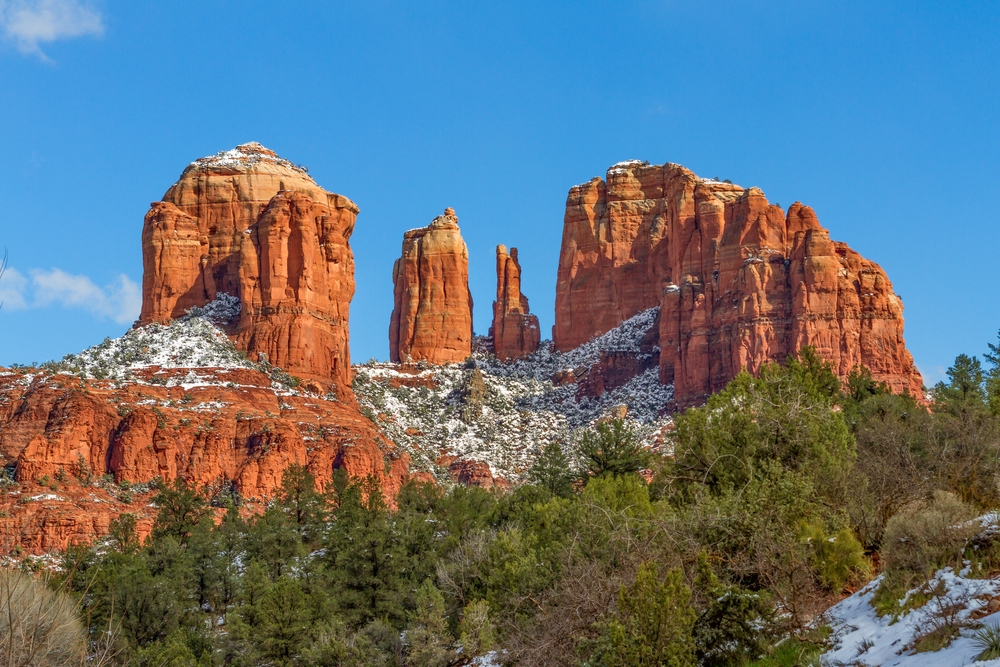
Evening: Drive to Red Rock Crossing (Crescent Moon Ranch, day-use fee applies) and sit by Oak Creek as the sun sets behind Cathedral Rock. This is the view that is on half the postcards in town, and it genuinely lives up to the hype.
Day 3: The Big One
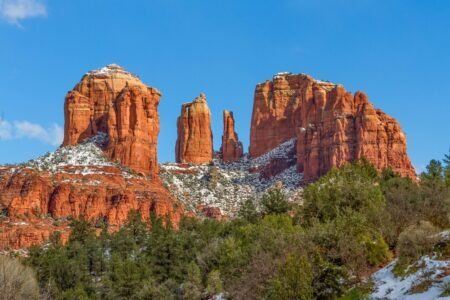
Early Morning: Cathedral Rock. Get there at sunrise before the crowds. The hike is moderately challenging (there is a famous scramble section near the top), but the energy at this site is what people talk about for years afterward. Cathedral Rock is associated with feminine, inflow energy, the kind that draws emotion to the surface. If you are going to feel something at a vortex site, it will probably be here.
Sit at the saddle between the two spires. Close your eyes. Breathe. Give it ten minutes. If tears come, let them. You will not be the first person to cry at Cathedral Rock and you will not be the last.
Mid-morning: Book a psychic reading if you are open to it. Even skeptics find value in the experience of having a perceptive stranger reflect your inner world back to you. Go in with one specific question, not a general “what do you see?”
Afternoon: Visit Boynton Canyon for the full trail experience (6 miles round trip) or just the short spur to the Kachina Woman formation. This is the vortex where both masculine and feminine energies meet, and it is sacred to the Yavapai-Apache people. Walk quietly. Respect the land.
Evening: Get your second aura photo and compare it with your Day 2 photo. Regardless of what you believe about aura photography, the comparison is almost always interesting.
Day 4 (If You Have It): Integration
Spend your last day doing nothing structured. Walk. Sit by the creek. Browse a New Age shop and let yourself buy the weird thing that calls to you. Journal if you are a journaler. The experiences of the previous days need time to integrate. Do not rush back to “normal” immediately.
Common Questions from First-Timers
“What if I do not feel anything at the vortex sites?” That is completely fine and more common than the internet suggests. The landscape alone is worth the trip. “Not feeling anything” does not mean you are broken or doing it wrong.
“Will people judge me if I look like a tourist?” No. Sedona is a town that runs on tourism. The spiritual community here is overwhelmingly welcoming, even (especially) to beginners. Nobody expects you to show up knowing the difference between Reiki and Qi Gong.
“Do I need to book everything in advance?” For readings and healing sessions, yes, especially during peak season (March through May, September through November). For vortex hikes, no booking needed.
“Is this all just the placebo effect?” Maybe. But the placebo effect is a real, measurable phenomenon that produces actual physiological changes. If Sedona is a placebo, it is a remarkably effective one.
Planning logistics? The Sedona Chamber of Commerce visitor site has current information on lodging, events, and trail conditions.
Related: Start with our Sedona Vortex Guide for the foundation, then explore Crystal Shops, Sound Baths, and Meditation Spots.
Keep exploring: Sedona vortex guide · things to do in Sedona · Sedona, Arizona guide